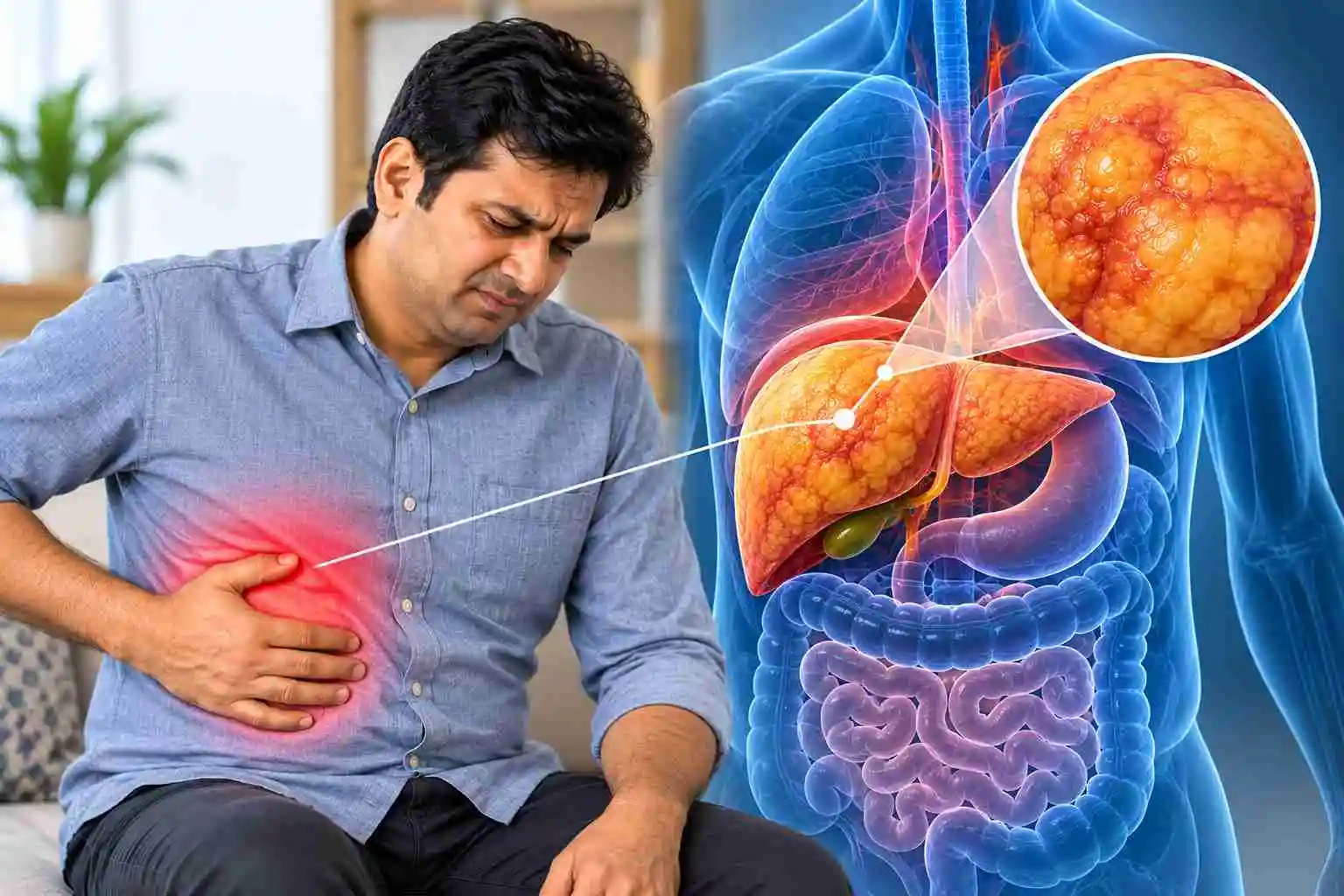


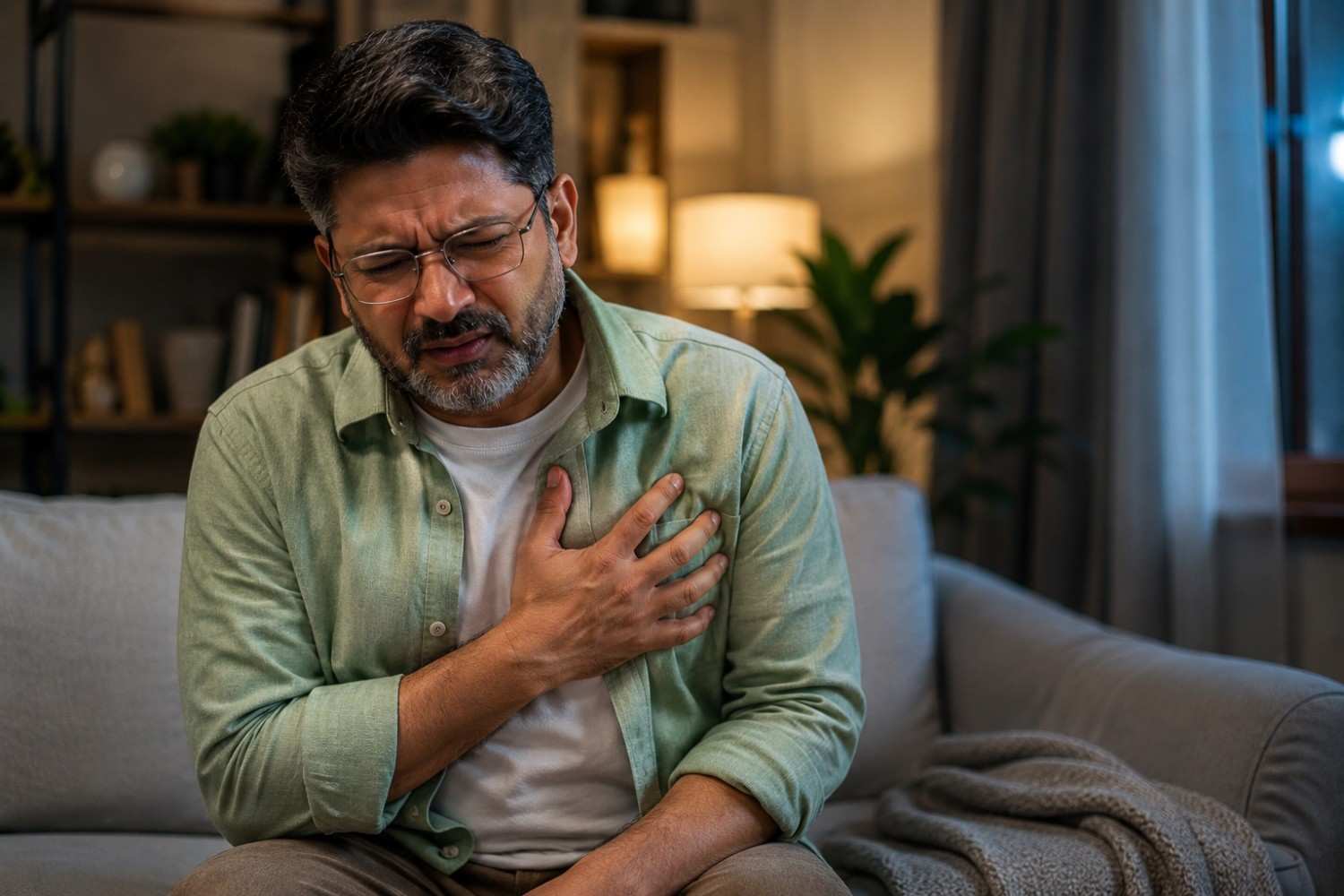
Chest discomfort after a meal, especially a heavy one, is one of the most common reasons people search for reassurance online. Most of the time, it is heartburn. Occasionally, it is a heart attack. This guide explains how the two conditions differ, why they are so often confused, and exactly what to do when you cannot immediately tell which one you are dealing with.
What Is Acidity or Heartburn?
Heartburn is the burning sensation caused by acid reflux, or gastroesophageal reflux disease (GERD), when it happens regularly. Stomach acid moves backward into the esophagus, which has no protective lining against it, producing that familiar burning feeling behind the breastbone. It is a digestive issue, not a cardiac one, and it is rarely dangerous on its own.
What Is a Heart Attack?
A heart attack, or myocardial infarction, happens when a blood clot blocks flow to part of the heart muscle. Deprived of oxygen, heart tissue starts to die within minutes. This is a medical emergency. The longer treatment is delayed, the more permanent the damage.
Heartburn vs Heart Attack: What's the Difference?
The two conditions can feel similar at first, but they tend to differ in where the pain sits, how it feels, how long it lasts, and what else comes with it.
1. Location of discomfort
Heartburn is usually felt just above the stomach, rising toward the throat and behind the breastbone.
A heart attack is more often felt in the center or left side of the chest, and unlike heartburn, it can radiate outward to the arm, jaw, neck, or back.
2. Type or sensation of pain
Heartburn feels sharp and burning. A heart attack tends to feel like pressure, tightness, or squeezing over a broad area rather than a single sharp point. Cardiologists sometimes note this in a clinical sign called Levine’s sign. Many people having a heart attack instinctively press a clenched fist to their chest to describe the pressure. Pain you can point to with a single finger is less often cardiac, though it is a useful clue rather than a diagnosis on its own.
3. Duration and pattern
Heartburn typically eases within a couple of hours, often with antacids or by sitting upright.
Heart attack discomfort often persists beyond 15 minutes and is not reliably relieved by rest or antacids. It can also ease and return, so pain going away is not proof that you are safe.
4. Other symptoms
A heart attack often brings on symptoms beyond chest discomfort, such as breathlessness or cold sweats, which heartburn does not typically cause. In people with diabetes, nerve damage can blunt pain signals enough that a heart attack happens with little or no chest pain at all. This is called a silent heart attack. It is a key reason diabetes is treated as a major risk factor, not just for developing heart disease, but for missing it when it happens.
5. Symptoms that can overlap
Both conditions can cause nausea and a general sense of indigestion, which is exactly why people delay seeking care. Women are more likely than men to have this kind of overlap. Roughly 40 percent of women who have had a heart attack report symptoms resembling heartburn in the lead-up to the event. Many also report unusual fatigue or sleep disturbance for weeks beforehand rather than obvious chest pain, which is a major reason women, on average, wait far longer than men to seek emergency care.
Warning Signs That May Indicate a Heart Attack
Beyond chest discomfort, these signs are far more associated with a heart attack than with acidity:
- Sudden shortness of breath
- Cold sweats or clammy skin
- Dizziness, lightheadedness, or fainting
- Unusual, extreme fatigue
- Pale or grey-looking skin
Certain factors also raise the odds that new chest discomfort is cardiac rather than digestive, and mean any of the symptoms above should be taken more seriously:
- High blood pressure or high cholesterol
- Diabetes
- Current or past smoking, or obesity
- Family history of heart disease
- Age over 45 for men, or over 55 for women, or postmenopausal status
Conclusion
While heartburn is a common nuisance that most people manage on their own, a heart attack is a life-threatening emergency where minutes decide outcomes. The two can genuinely feel alike, especially for women and people with diabetes, which is precisely why guesswork is not a safe strategy. If you experience persistent chest pressure, pain that spreads to your arm, jaw, or back, or discomfort paired with sweating, dizziness, or breathlessness, do not wait to see how it develops. Call for emergency help and let a professional make the call. Being evaluated for a false alarm costs you little; missing a real heart attack can cost everything.
Frequently Asked Questions
1. Can heartburn cause chest pain that feels like a heart attack?
Yes. Acid reflux can produce a sharp, burning sensation in the chest that mimics cardiac pain, which is why doctors rely on tests like an ECG rather than symptoms alone to tell them apart.
2. What is the fastest way to tell if chest pain might be a heart attack?
Broad pressure or squeezing across the chest, especially if it spreads to the arm, jaw, or back and comes with sweating or breathlessness, points toward the heart. Sharp pain you can pinpoint with one finger is less often cardiac, though it should still be checked if it’s new or severe.
3. Should I take an antacid before deciding whether to seek help?
No. Don’t wait to see if an antacid works if there’s any chance the pain is cardiac. Relief from an antacid doesn’t reliably rule out a heart attack.
4. Can a heart attack happen without any chest pain?
Yes, particularly in women and people with diabetes, who may experience jaw pain, nausea, fatigue, or breathlessness with little or no chest pain.
5. How long should I wait before calling for emergency help?
No more than 15 minutes. If chest discomfort hasn’t eased, or is getting worse, and especially if it comes with sweating, dizziness, or breathlessness, call 112 or 108 immediately rather than continuing to monitor it yourself.
6. What emergency number should I call for chest pain in India?
Dial 112, India’s unified national emergency number, or 108 for a direct ambulance in most states. Don’t drive yourself to the hospital if a heart attack is possible.