

Kidney stones don’t always require surgery. Some small stones can pass through the urinary tract naturally, while others may become stuck, block urine flow or cause severe pain. The right treatment depends on the stone’s size, location and the patient’s overall health. Knowing when a stone can pass naturally and when medical treatment is needed can help prevent complications.
What Are Kidney Stones?
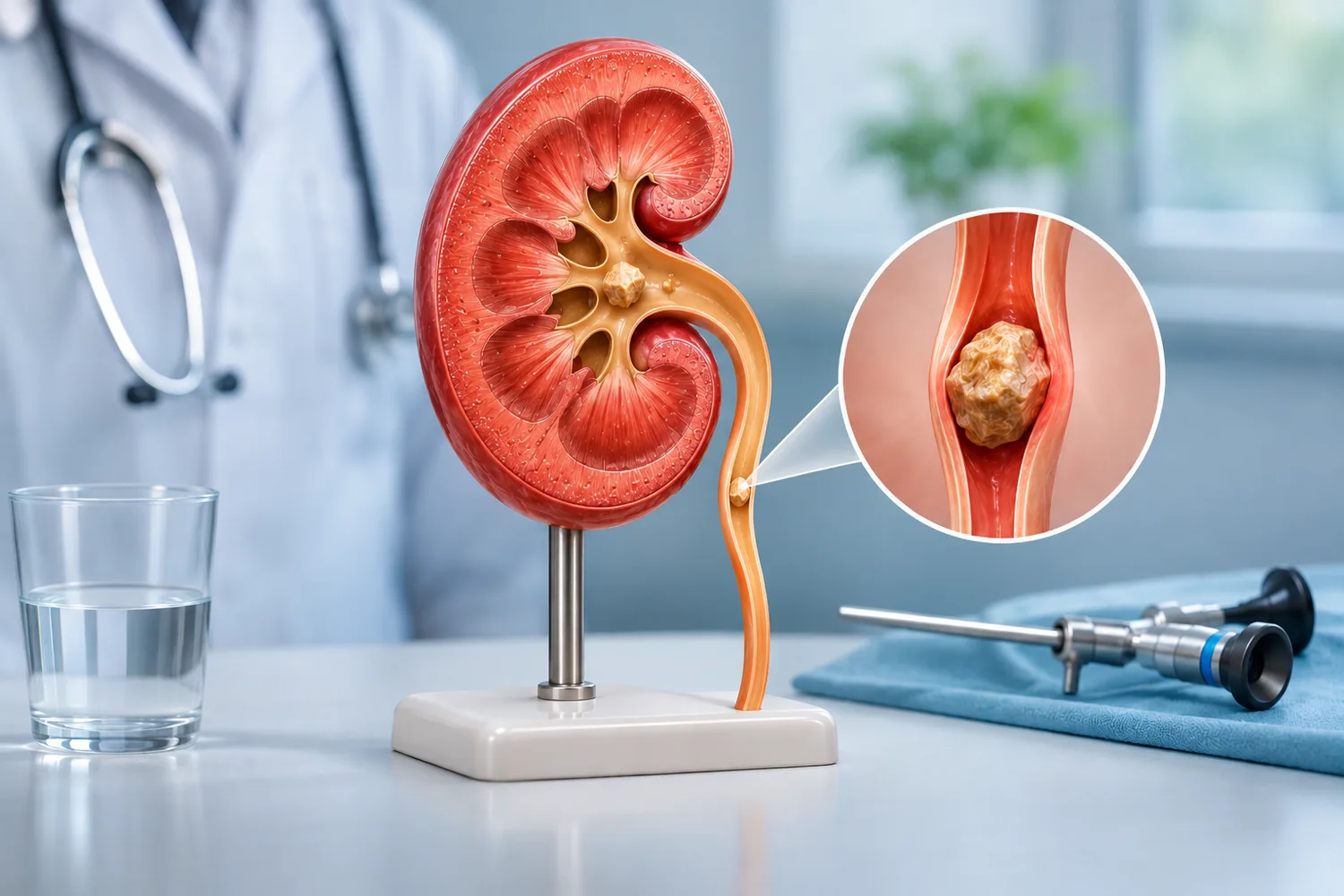
Kidney stones are hard deposits that form when minerals and salts in urine crystallise. They can range from tiny particles to larger stones that may interfere with normal urine flow.
Some stones remain inside the kidney without causing noticeable symptoms. Others move into the ureter, the narrow tube connecting the kidney to the bladder. If a stone gets stuck in this passage, it can cause severe pain and block the flow of urine.
Can Kidney Stones Pass Naturally?
Yes, many small stones can pass naturally during urination, particularly when they have moved from the kidney into the ureter.
Stones smaller than 5 mm generally have a better chance of passing without a procedure. Stones between 5 and 10 mm may also pass, although the chances are lower and depend on their exact size and location. Stones larger than 10 mm are less likely to pass naturally.
Location also matters. Stones in the lower part of the ureter, closer to the bladder, generally have a better chance of passing than those located higher up.
A small stone that remains inside the kidney may sometimes be monitored rather than removed. However, its growth, symptoms and risk of blockage or infection need to be assessed by a doctor.
How Does Stone Size Affect Natural Passage?
Stone size is one of the main factors doctors consider when assessing the likelihood of natural passage.
- Smaller than 5 mm – Generally have a higher chance of passing naturally, particularly in the lower ureter.
- Between 5 and 10 mm – May pass without a procedure, but the likelihood depends on the stone’s location and individual circumstances.
- Larger than 10 mm – Less likely to pass naturally and may require medical intervention.
These measurements are general guidance, not a guarantee. A urologist must assess the individual case before recommending observation.
How Do Doctors Decide the Right Treatment?
Doctors consider the stone’s size, location and effect on urine flow before recommending treatment.
Ultrasound or a CT scan may be used to identify the stone and check for blockage. Urine tests can help detect infection, while blood tests may be recommended to assess kidney function.
The doctor also considers pain severity, previous kidney stone episodes and the patient’s overall health. Based on these findings, treatment may involve monitoring, medication or a procedure to remove the stone.
When Is Medical Treatment Needed?
Medical treatment may be necessary when a stone causes repeated pain, affects urine flow or has a low chance of passing naturally.
Depending on the situation, treatment may include:
- Pain management – Prescribed medicines help control pain associated with kidney stones.
- Medical expulsive therapy – Doctors may prescribe alpha-blocker medicines for selected patients with ureteral stones. These medicines relax the muscles in the ureter and may help stones pass, particularly those measuring 5 to 10 mm in the lower ureter.
- Monitoring – Follow-up imaging and medical assessments help doctors check whether the stone has moved or passed.
These treatments aren’t suitable for everyone. The choice depends on the patient’s condition and clinical findings.
When Is Surgery Necessary?
A procedure or surgical intervention may be recommended when:
- The stone is too large to pass naturally.
- Pain continues despite appropriate medication.
- The stone causes persistent blockage of urine flow.
- Kidney function is affected.
- An infection develops alongside a urinary blockage.
- The stone remains in place and is unlikely to pass without intervention.
Surgery doesn’t always mean a large operation. Several minimally invasive procedures can break stones into smaller pieces or remove them using specialised instruments.
Common Procedures Used to Remove Kidney Stones
Doctors may recommend different procedures depending on the stone’s size, location and composition.
1. Extracorporeal Shock Wave Lithotripsy (ESWL)
ESWL uses focused shock waves from outside the body to break a kidney stone into smaller fragments. These pieces can then pass through urine. It may be suitable for selected stones depending on their size, location and density.
2. Ureteroscopy (URS)
During ureteroscopy, a thin instrument with a camera is passed through the urinary opening and bladder into the ureter. The doctor locates the stone and may remove it or break it into smaller pieces using a laser.
3. Percutaneous Nephrolithotomy (PCNL)
PCNL is commonly used for large or complex kidney stones, particularly those larger than 2 cm. The doctor makes a small incision in the back to access the kidney and remove the stone using specialised instruments.
The most appropriate procedure depends on imaging results, the patient’s medical condition and the urologist’s assessment.
When Should You Seek Immediate Medical Attention?
Seek urgent medical attention if you experience:
- Fever or chills along with kidney stone symptoms.
- Severe pain that doesn’t improve with prescribed medication.
- Difficulty or inability to pass urine.
- Persistent vomiting or signs of dehydration.
- Severe pain accompanied by other signs of infection.
A kidney stone that blocks urine flow while an infection is present is a urological emergency. It may require immediate drainage through a ureteral stent or nephrostomy tube, along with antibiotics. Definitive stone removal is generally delayed until the infection is controlled.
Kidney stones can sometimes pass naturally, but larger stones and those causing complications need timely medical care. A proper medical assessment helps determine whether monitoring, medication or a procedure is the safest option.
Consultation at Shree Sai Hospital
Experiencing kidney stone pain or urinary discomfort? Contact Shree Sai Hospital, Kandivali East, to enquire about consultation with its Urology or Nephrology team. Call +918928300290. Emergency services are available 24/7.
Medical Disclaimer: This article is intended for general educational purposes only and does not replace professional medical advice, diagnosis or treatment. Consult a qualified healthcare professional for individual medical concerns. Do not delay medical care or attempt self-treatment based on this information.